




Book a consultation. Book online or call us. Bring any recent blood results and a list of the medicines and supplements you take.
 Dr. Torun’s Clinic
Care at the clinic
Vitamin, hydration and recovery drips, with a medical review before your first appointment.
Medical Ozone-Oxygen-Therapy as a complementary treatment: major autohaemotherapy, injection therapy and insufflation, after an individual assessment.
All Ozone-Oxygen-TherapyIron infusions, planned around your blood results and history.
All Iron ClinicAnti-wrinkle, fillers, PRP and mesotherapy, assessed and delivered by a medical doctor.
All AestheticsGeneral practice for the whole family, from vaccinations to women’s and men’s health and minor surgery.
Monday–Friday, 9am – 5pm59A Old Bawn Way, Tallaght, Dublin, D24 RY77
Book onlineat Dr. Torun’s Clinic
Vitamin B12, folic acid, and vitamins A, D, E and K, given as a small injection when your blood results show you need them.

Your doctor confirms which injection suits you, and how often, before you begin.
Each is chosen from your blood results, never as a general boost. Your doctor tells you which one you need, if any.
Contributes to normal red blood cell formation, the normal function of the nervous system and the reduction of tiredness and fatigue.
Given as A single injection or a course of five
Contributes to normal blood formation, the reduction of tiredness and fatigue, and maternal tissue growth during pregnancy.
Given as A single injection or a course of five, on its own or with B12
The four fat-soluble vitamins in one injection, for when they are low and hard to absorb from food.
Given as Usually monthly, reviewed against your blood results
B12 and folate are needed to make healthy red blood cells. If your blood results show you are low, your doctor may recommend a single injection or a course of five, given after your blood results and a review with your doctor.
Levels are more often low with:
We check B12 and folate together before treating, because folic acid on its own can hide a low B12.
Vitamins A, D, E and K are the fat-soluble vitamins. They dissolve in fat rather than water, need dietary fat and bile to be absorbed, and are stored in the liver and body fat.
Contributes to normal vision, the maintenance of normal skin and mucous membranes, and the normal function of the immune system.
Found in Liver, eggs, dairy, and orange and leafy green vegetables
Contributes to the normal absorption of calcium and phosphorus, the maintenance of normal bones and muscle function, and the normal function of the immune system.
Found in Mostly made in the skin from summer sunlight; oily fish and eggs
Contributes to the protection of cells from oxidative stress.
Found in Nuts, seeds and plant oils
Contributes to normal blood clotting and the maintenance of normal bones.
Found in Leafy green vegetables, broccoli and fermented foods
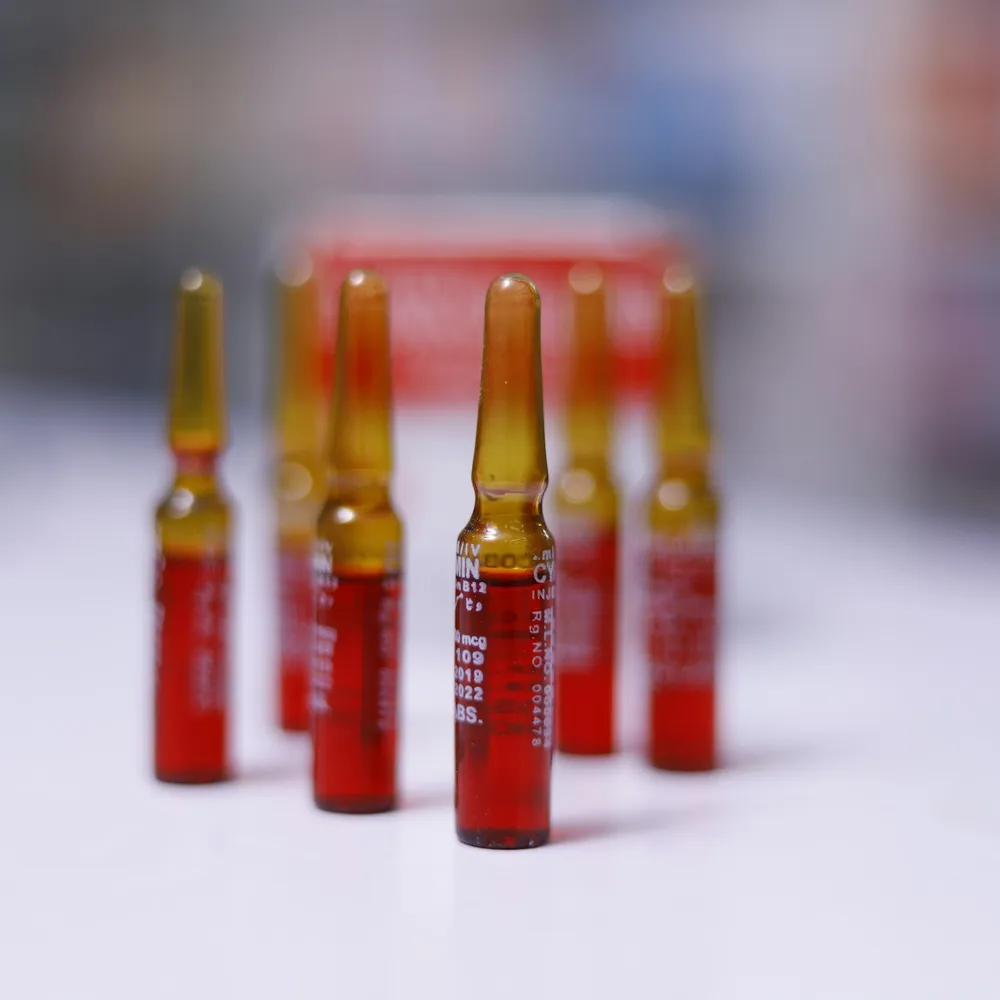
An injection into the muscle reaches the body without depending on the gut. That matters when a condition, an operation or a medicine makes it hard to absorb B12 from food, or fat, and with it vitamins A, D, E and K.
It is important to be honest about the evidence. For people who absorb vitamins normally, a tablet can work well, and there is no proven extra benefit from injecting vitamins you are not short of. That is why every course starts with blood tests and a doctor’s assessment, and why we may recommend a tablet instead.
The fat-soluble vitamins are an active area of medical research. These are the areas most often studied:
Research in these areas is ongoing and the results are often mixed. A vitamin ADEK injection is not a treatment for any of these conditions and does not replace the care you already receive. We only offer it when your history and blood results suggest it may help you.
A vitamin injection may be considered for:

B12, folate and vitamin D are the levels most often found low. In Ireland there is too little sunlight from October to March for the skin to make vitamin D. If your results are low and diet or tablets have not been enough, an injection may be an option.

B12 needs a protein made in the stomach to be absorbed, and vitamins A, D, E and K need dietary fat and bile. Pernicious anaemia, coeliac disease, inflammatory bowel disease, some liver, gallbladder and pancreatic conditions, and stomach or weight-loss surgery can all reduce how much reaches the body. We work alongside the specialist who manages your condition.

For many people a tablet is the simplest choice, and we will say so. An injection is considered when tablets are not tolerated, are not being absorbed, or your levels have not improved on a recheck.
Where tiredness is the main concern, the right first step is an assessment to find the cause, such as low iron, low B12 or a thyroid problem, rather than starting with an injection.
Depending on your history and the injection, your doctor may check:
Four steps, and you always know what happens next.
Book a consultation. Book online or call us. Bring any recent blood results and a list of the medicines and supplements you take.
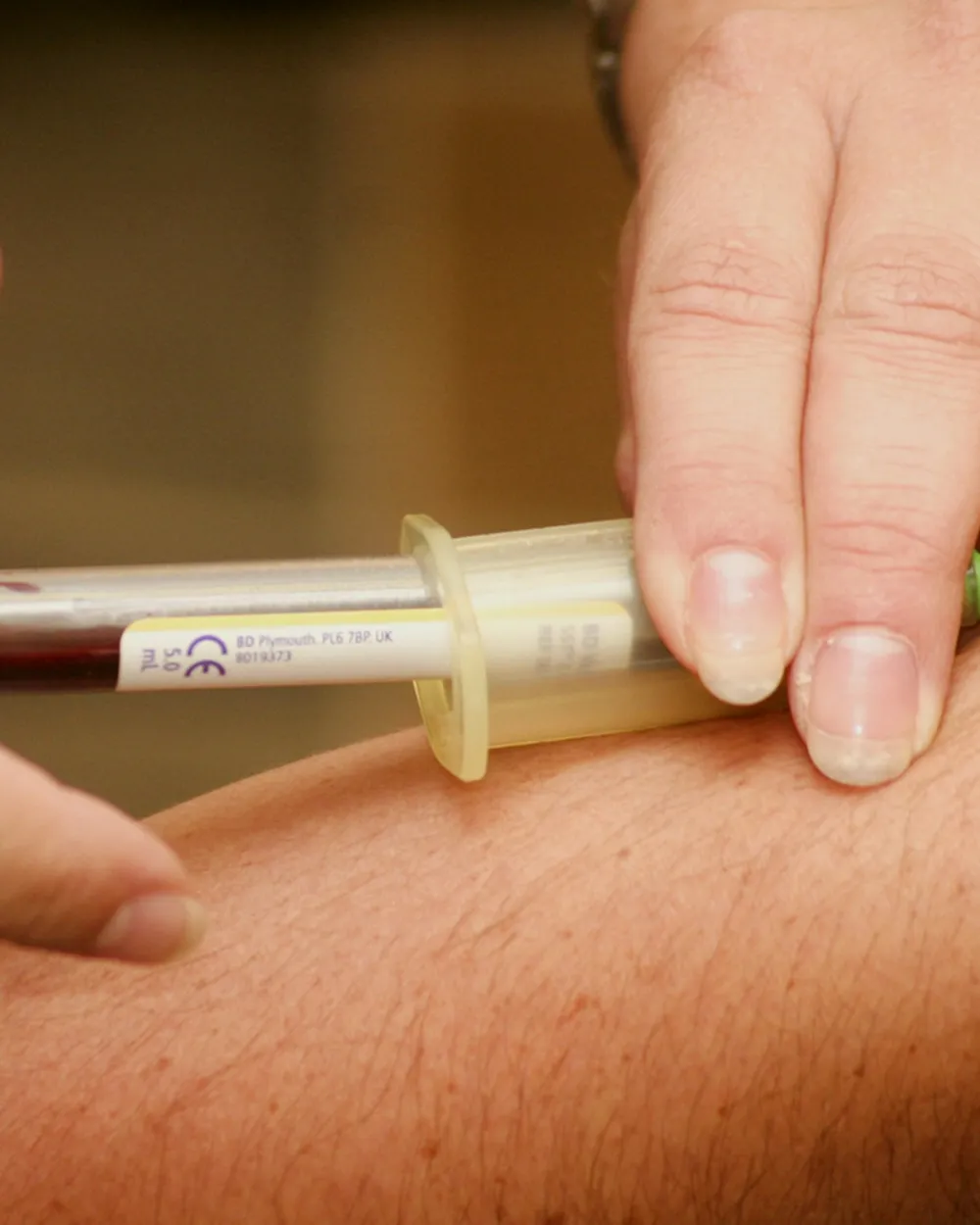
Assessment and bloods. A doctor reviews your history, medicines and diet, and arranges the blood tests you need. We only go ahead when the results support it.

Your injection. A small injection into the muscle of the upper arm, given by a doctor or qualified nurse. It takes a few minutes, and we ask you to stay with us for a short while afterwards.

Review and recheck. B12 and folic acid courses run over a few weeks; ADEK is usually monthly. We recheck your levels and adjust, space out or stop, so you never have more than you need.
Single injections, or a course of five at a better price per injection.
Blood tests and the first consultation are priced separately. See our full fee list for all services.
We accept
The most common effects are soreness, redness or a small bruise where the injection was given. With B12 and folic acid, other side effects are uncommon, such as mild diarrhoea or itching. Allergic reactions are rare but can be serious, particularly to vitamin K, which is why we ask you to stay with us for a short while after each injection.
Fat-soluble vitamins build up in the body, so too much can cause harm. We do not give the ADEK injection more often than your results support. It may not be suitable if you take warfarin or another blood thinner, have a bleeding disorder, high calcium, kidney stones, sarcoidosis, or severe kidney or liver disease, take retinoid medicines such as isotretinoin, or are pregnant or planning a pregnancy. It is not given to children. Tell us about every medicine and supplement you take.
Tested first, explained clearly, followed up. Before any vitamin injection we review your history, medicines and diet, check the levels that matter, and only treat what your results show.
Looking for other care alongside your vitamins? See our iron infusions or our full range of IV therapy services.
Book appointment →Vitamin B12, folic acid, B12 and folic acid together, and a vitamin ADEK injection that contains the four fat-soluble vitamins A, D, E and K. Your doctor recommends one after your blood results.
It depends on your results. Some people need a single injection; others a course of five over a few weeks, followed by a recheck. If the cause of a low B12 continues, you may need injections every few months.
Not for everyone. If you absorb vitamins normally, a tablet can work well, and we will recommend it. An injection is considered when tablets are not tolerated or not absorbed, or when your levels have not improved on a recheck.
Most people feel a short sting. The muscle can feel sore for a day or two, much like after a vaccine.
Tell us about every medicine you take. Vitamin K affects how warfarin and similar medicines work, and vitamin E can increase bleeding risk, so the ADEK injection is often not suitable. Your doctor will advise you.

Choose your treatment and a time that suits you, and pay securely in about two minutes. Unsure where to start? Message us on WhatsApp and we’ll point you to the right appointment.
Monday–Friday, 9am – 5pm